BEVERLY HILLS, CA — Beverly Hills incorporated as an independent city on January 28, 1914, after investors who came hunting for oil instead found water and a townsite.
Long before the boutiques, this was farmland. The Tongva people lived on the land for generations. In 1769, Gaspar de Portolá traveled native trails that now trace the route of Wilshire Boulevard.
The Mexican era reshaped the map. In 1828, Californio ranchera María Rita Quinteros de Valdez and her husband settled 4,500 acres. They named the grant Rancho Rodeo de las Aguas.
In 1854, she sold the ranch to Benjamin Davis Wilson and Henry Hancock. By the 1880s, the land had been cut into 75-acre parcels. Buyers from Los Angeles and the East Coast moved in.
A Ranch Famous for Lima Beans
Henry Hammel and Andrew H. Denker bought most of the tract and planted lima beans. Locals called it the Hammel and Denker Ranch. By 1888, the two men planned a town named Morocco on the property.
That plan never took shape. Farming held the land instead. Rows of beans outlasted the town that never was.
| Quick facts | Detail |
|---|---|
| Incorporated | January 28, 1914 |
| Original name | Rancho Rodeo de las Aguas (1828) |
| Early crop | Lima beans (Hammel and Denker Ranch) |
| Could not find | Commercially viable oil (1900) |
| Renamed | Beverly Hills (1906) |
| First hotel | Beverly Hills Hotel, opened 1912 |
| Land area | 5.71 square miles |
| Population (2020) | 32,701 |
The Oil That Wasn’t
In 1900, Burton E. Green and a syndicate of investors formed the Amalgamated Oil Company. The group bought the Hammel and Denker Ranch and drilled for oil. The wells never produced enough to matter commercially.
The investors pivoted instead of quitting. In 1906, they reorganized as the Rodeo Land and Water Company. They renamed the property Beverly Hills and began selling lots.
The name honored Beverly Farms in Beverly, Massachusetts. The hills supplied the rest of it. The Los Angeles Times covered the launch on September 2, 1906.
The paper named the Percy H. Clark Company as manager of the foothill development. The firm promised a district built on curved roads and careful planning.
No expense is being spared to make this a fine suburban district.
Los Angeles Times, September 2, 1906
The paper described a property laid out on beautiful curved lines. The first house rose in 1907, but sales stayed slow.
A Hotel, Then a City
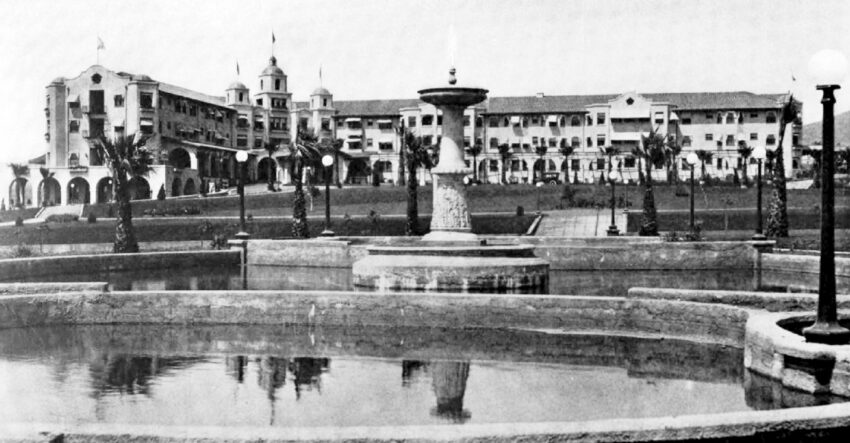
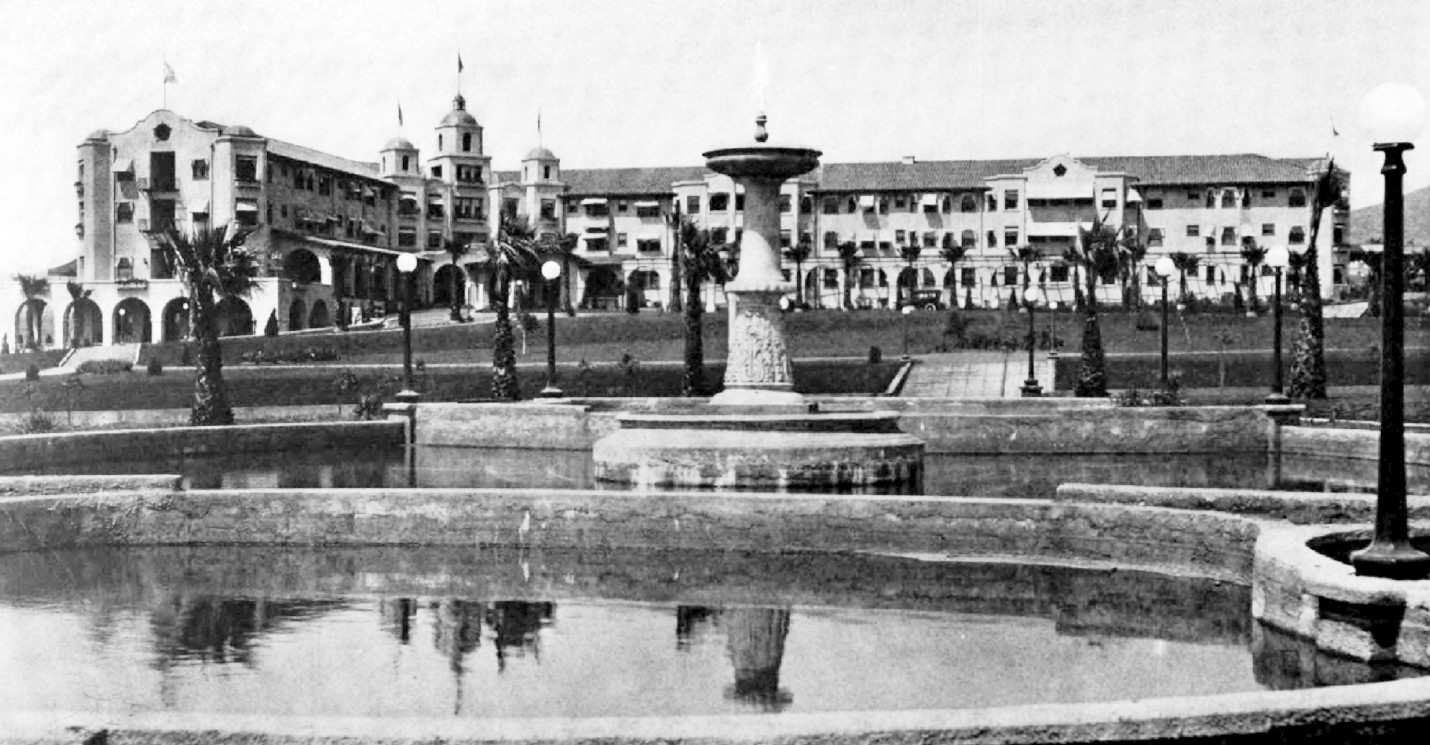
Burton Green started building the Beverly Hills Hotel in 1911. It opened in 1912. Visitors drawn by the hotel began buying land nearby.
The hotel was the first substantial building project in the area. It gave the young subdivision a social center and a reason for outsiders to visit.
By 1914, the population had grown enough to qualify for cityhood. Beverly Hills incorporated on January 28, 1914. The Rodeo Land and Water Company then split its water business from its real estate business.
The Beverly Hills Utility Commission took over the utility assets that September.
Star Power and a Water Fight
In 1919, Douglas Fairbanks and Mary Pickford bought land on Summit Drive. Their mansion, finished in 1921, became known as Pickfair. Other movie stars followed with estates of their own.
By the early 1920s, water was the city’s political flashpoint. In 1923, annexation to Los Angeles was proposed as the usual fix. Residents including Pickford, Fairbanks, Will Rogers, and Rudolph Valentino fought the plan.
A special election killed annexation 507 votes to 337. Beverly Hills stayed its own city.
Landmarks kept rising. The Beverly Wilshire Hotel opened on Wilshire Boulevard in 1928. That same year, oilman Edward L. Doheny finished Greystone Mansion, a house with 55 rooms.
Greystone is now owned by the city and listed on the National Register of Historic Places. In April 1931, the city dedicated a new City Hall built in Italian Renaissance style.
Beverly Gardens Park was extended along Santa Monica Boulevard. The Electric Fountain marks the corner of Santa Monica and Wilshire Boulevards. A small Tongva figure kneels in prayer at its top.
The early growth carried a hard exclusion. Restrictive covenants barred non-white residents from owning or renting property, except as servants. In the early 1940s, Black actors challenged those rules in court.
Federal judge Thurmond Clarke ruled against enforcement. The Supreme Court declared such covenants unenforceable in 1948. A group of Jewish residents filed a brief supporting that case.
From Rodeo to the Golden Triangle
The retail district took shape over decades. Since the 1960s, Rodeo Drive has ranked among the most expensive shopping streets in the world.
The Golden Triangle now anchors downtown. It sits between Santa Monica Boulevard, Wilshire Boulevard, and Crescent Drive. Rodeo Drive draws high-end boutiques, while Wilshire Boulevard holds the city’s two remaining department stores.
Those stores are Saks Fifth Avenue and Neiman Marcus. Smaller streets serve residents. Linden, Roxbury, Bedford, and Camden Drives hold medical offices, banks, and delicatessens.
Cañon and Crescent Drives draw local and regional diners. South Beverly Drive is another dining and shopping hub. Nearly every corner of the triangle trades on foot traffic.
Growth spread north and east. In 1956, developer Paul Trousdale bought the Doheny Ranch and won annexation into the city. He built Trousdale Estates, a 410-acre neighborhood later home to Elvis Presley, Frank Sinatra, and Richard Nixon.
Oil never fully left. The Beverly Hills Oil Field still operates four urban drilling islands that bore diagonally beneath the city.
The population surged early, then settled. The 1930 census counted 17,429 residents; by 1940 the figure had climbed to 26,823. After the 1979 Islamic Revolution in Iran, many Persian Jews settled here.
Federal transit reached the city late. Metro’s D Line eventually extended into Beverly Hills along Wilshire Boulevard after decades of local opposition. The city’s ZIP code, 90210, later became famous through a 1990s television drama.
Beverly Hills now covers 5.71 square miles. The 2020 census counted 32,701 residents. A lima-bean ranch became a global landmark.